26TRA738 Moving Towards Inclusion: Supporting Learners with Developmental Coordination Disorder (DCD)
Dates: Monday 16th, 23rd & 30th November 2026
Time: 7.00 - 8.00 pm
Venue: Online via Zoom
Target audience: Primary and post-primary teachers, Special education teachers, School leaders, SNAs, NQTs, Teacher educators, Educational support professionals, Parents and caregivers
Programme Overview
Developmental Coordination Disorder (DCD) is one of the most prevalent yet least recognised neurodevelopmental conditions in schools. While learners with DCD often experience challenges with motor coordination, organisation, handwriting, participation in physical education, and activities of daily living, the impact of the condition extends far beyond movement. Difficulties with confidence, social participation, academic engagement, and emotional wellbeing can significantly influence learners' educational experiences and long-term outcomes.
This three-part professional learning series is designed to equip teachers with the knowledge, confidence, and practical strategies needed to create more inclusive learning environments for learners with DCD. Grounded in current research and informed by authentic classroom practice, the workshops combine evidence-informed approaches with practical, immediately applicable strategies. Through interactive discussion, case studies, reflective activities, and collaborative problem-solving, participants will explore how inclusive pedagogy can enhance participation, achievement, and wellbeing for learners with DCD while benefiting all learners.
Session 1: Understanding Developmental Coordination Disorder (DCD)
Recognising Strengths, Understanding Challenges
Session Overview
This introductory workshop provides teachers with a comprehensive understanding of Developmental Coordination Disorder (DCD), exploring current definitions, prevalence, characteristics, and the lived experiences of children and young people with DCD. Participants will examine how DCD influences learning, participation, and wellbeing across the school day, while considering current research, policy, and inclusive education frameworks. By centring learner voice alongside evidence-informed practice, the session aims to build understanding, challenge misconceptions, and develop teachers' confidence in recognising and supporting learners with DCD.
Learning Outcomes
By the end of this session, participants will be able to:
- Develop an evidence-informed understanding of Developmental Coordination Disorder and its impact on learning, participation, and wellbeing.
- Recognise the diverse ways DCD may present across educational settings.
- Understand the cognitive, emotional, social, and physical challenges commonly experienced by learners with DCD.
- Explore current research, policy, and inclusive education frameworks relevant to supporting learners with DCD.
- Reflect on the lived experiences and voices of learners with DCD to inform inclusive classroom practice.
- Theme tune of little boxes.
Session 2: Move Write: A Whole-Body Sensorimotor Approach to Handwriting
Session Overview
This interactive workshop explores how a whole-body sensorimotor development can support handwriting development. Drawing on Dr. Sinéad McCauley Lambe's research, participants will examine how gross motor skills, fine motor skills and visual perceptual skill contribute to the development of key handwriting skills. The workshop considers how playful, multisensory learning experiences, combined with explicit instruction, can strengthen the foundational skills required for handwriting and wider learning. While particularly relevant for learners with DCD, these approaches reflect high-quality inclusive practice that benefits all learners.
Learning Outcomes
By the end of this session, participants will be able to:
- Explain the relationship between sensorimotor development, movement, and successful classroom participation.
- Understand how gross motor, fine motor, visual perceptual, and sensory experiences underpin handwriting development and broader learning.
- Explore the principles underpinning Dr. Sinéad McCauley Lambe's Move Write whole-body sensorimotor approach to handwriting development.
- Design playful, multisensory learning experiences that strengthen the foundational skills required for handwriting and classroom engagement.
- Apply practical classroom strategies that support learners with DCD while promoting participation and success for all learners.
- Reflect on how Universal Design for Learning (UDL) and movement-rich pedagogies can reduce barriers to participation and foster inclusive learning environments.
Workshop Themes
Participants will explore:
- Why movement matters for learning
- Sensorimotor development and classroom participation
- Gross motor, fine motor, and visual perceptual foundations
- The role of sensory-rich and play-based learning
- Principles of the Move Write approach
- Explicit instruction within movement-based learning
- Practical strategies to support handwriting and classroom participation
- Inclusive adaptations for learners with DCD
Session 3: Supporting Learner Outcomes and Wellbeing
Building Confidence, Belonging and Lifelong Participation
Session Overview
The final workshop focuses on supporting the holistic development of learners with DCD by promoting confidence, resilience, self-advocacy, and meaningful participation in school life. Participants will explore the relationship between DCD, mental health, identity, and educational engagement, while considering the central role of positive teacher–learner relationships and inclusive school cultures. The session will also examine effective collaboration with families and multidisciplinary professionals to create coordinated supports that enable learners to flourish academically, socially, and emotionally.
Learning Outcomes
By the end of this session, participants will be able to:
- Recognise the relationship between DCD, self-esteem, mental health, and educational engagement.
- Identify approaches that strengthen learner confidence, autonomy, and self-advocacy.
- Foster positive teacher–learner relationships that enhance motivation, belonging, and participation.
- Collaborate effectively with families and multidisciplinary professionals to support learner outcomes.
- Develop an action plan for embedding inclusive practices that promote the academic, social, and emotional wellbeing of learners with DCD.
Programme Features
Throughout the series, participants will engage with:
- Current national and international research.
- Evidence-informed and neurodiversity-affirming practice.
- Authentic case studies and learner perspectives.
- Practical classroom strategies that can be implemented immediately.
- Interactive discussion, collaborative reflection, and problem-solving activities.
- Downloadable resources, templates, and planning tools.
- Opportunities to develop an individual action plan for inclusive practice.
Bio of Presenters
Dr Carol Kennedy-Gardiner

Dr Carol Kennedy-Gardiner works as an Assistant Lecturer in Atlantic Technological University (ATU), Sligo. Prior to her appointment, she worked for the National Council of Curriculum and Assessment (NCCA) as an Education Officer for SEN and with the Professional Development Service for Teachers (PDST)/ Oide as an Advisor for English as an Additional Language at Post Primary Level. She is seconded from her role as a mainstream class teacher and Special Education Teacher in Coláiste Cholmcille, Ballyshannon, Co. Donegal. Her doctoral research in the area of Special and Inclusive Education examined the experiences of learners deemed to have developmental co-ordination disorder (DCD) in Irish post-primary schools. She has worked as a mainstream and learning support teacher in the post-primary context since 2001. As an early career teacher, she completed a Post Graduate Diploma in Special Educational Needs in Trinity College Dublin, followed by Masters in Management and Leadership in Education from Saint Angela’s College, Sligo in conjugation with National University of Ireland, Galway. She has taught in post-primary mainstream, learning support and autism classes for more than twenty years, supporting students with a range of Special Educational Needs.
Dr Carol Kennedy-Gardiner is an Assistant Lecturer at Atlantic Technological University (ATU), Sligo. Prior to this, she worked with the National Council for Curriculum and Assessment (NCCA) as an Education Officer for Special Educational Needs and with PDST/Oide as an Advisor for English as an Additional Language at post-primary level. Her doctoral research explored the experiences of learners with developmental co-ordination disorder in Irish post-primary schools. She has over twenty five years’ teaching experience and holds postgraduate qualifications from Trinity College Dublin, NUI Galway and Dublin City University.
Dr Sinéad McCauley Lambe
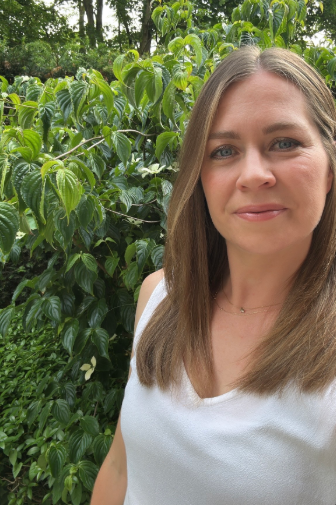
Dr Sinéad McCauley Lambe is an Assistant Professor in the School of Inclusive and Special Education. She is a former primary school teacher (mainstream and SET in a DEIS Band 1 junior school). She is a graduate of St Patrick’s College, Drumcondra (B.Ed, M.Ed, PhD), and teaches across a range of teacher education programmes from initial to postgraduate Diploma, Masters and Doctoral level in DCU. She is the author of the Move Write programme - a whole-body sensorimotor approach to handwriting, and has published a range of educational resources aligned with inclusive pedagogical approaches in the field of handwriting. She has published in the area of motor development and handwriting and has delivered several webinars for schools with Education Centres across the country.
Dr McCauley Lambe is the PI for a current research project funded by Research Ireland. The project is a collaboration between DCD/Dyspraxia Ireland and DCU. It aims to identify specific supports that caregivers and early childhood educators require to effectively support the motor development of young children, and to design a developmentally appropriate training course and accompanying resources which will be implemented at both a community and national level.
Course Details
| Course Start Date / Time | 16-11-2026 7:00 pm |
| Course End Date / Time | 30-11-2026 8:00 pm |
| Cut off date | 30-11-2026 7:15 pm |
| Available place | 500 |
| Fee | Free |
| Number Hours | 3 x 1 hour sessions |
| Speaker | Dr Carol Kennedy-Gardiner & Dr Sinéad McCauley Lambe |